
Armor of God Scripture: Ephesians 6:10–18 Explained
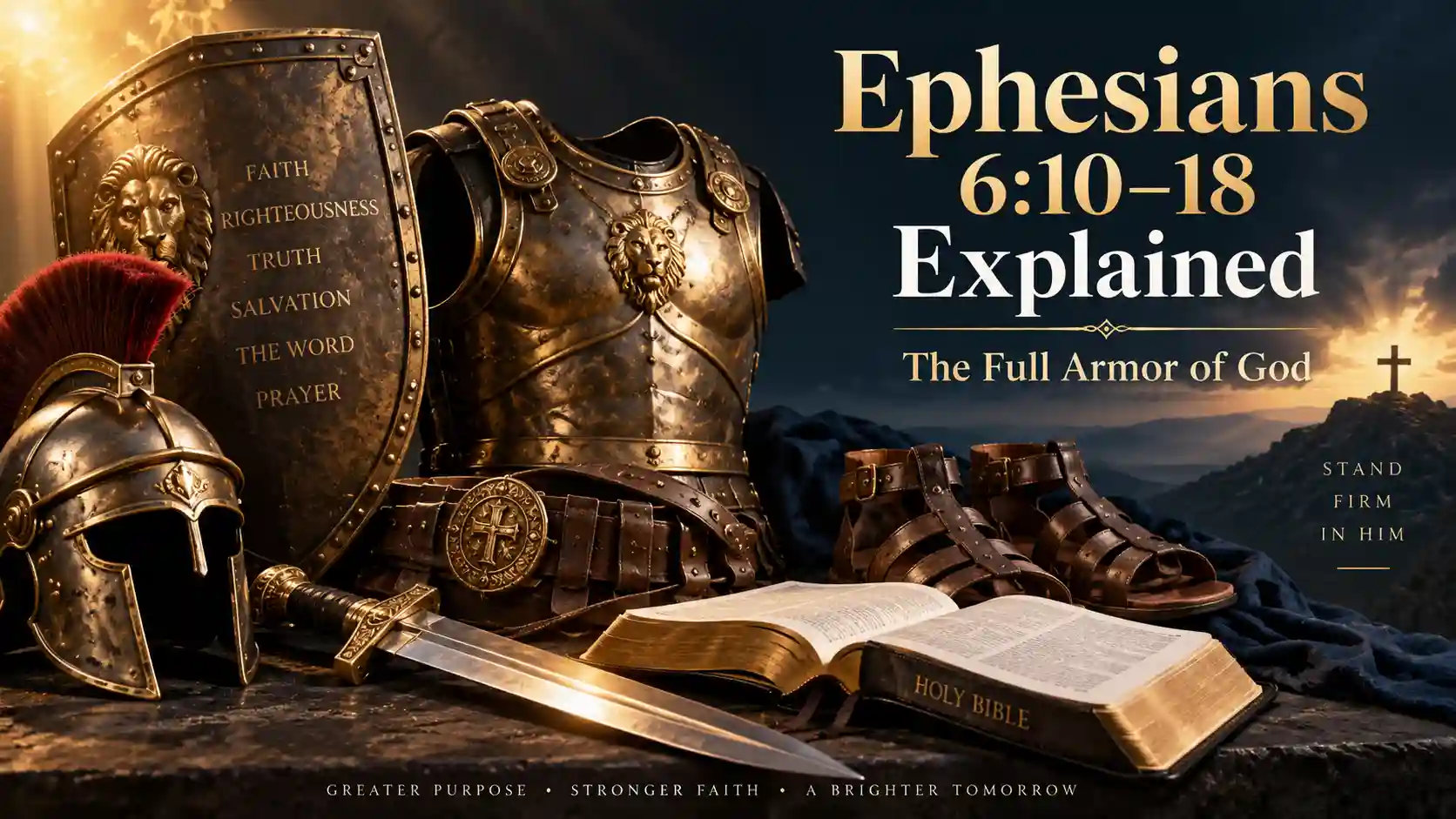
The Armor of God scripture in Ephesians 6:10–18 is more than a memorable list of spiritual symbols. Paul calls believers to depend on God’s strength, stand firm against spiritual evil, and live in truth, righteousness, gospel peace, faith, salvation, God’s Word, and persistent prayer.
Quick Answer
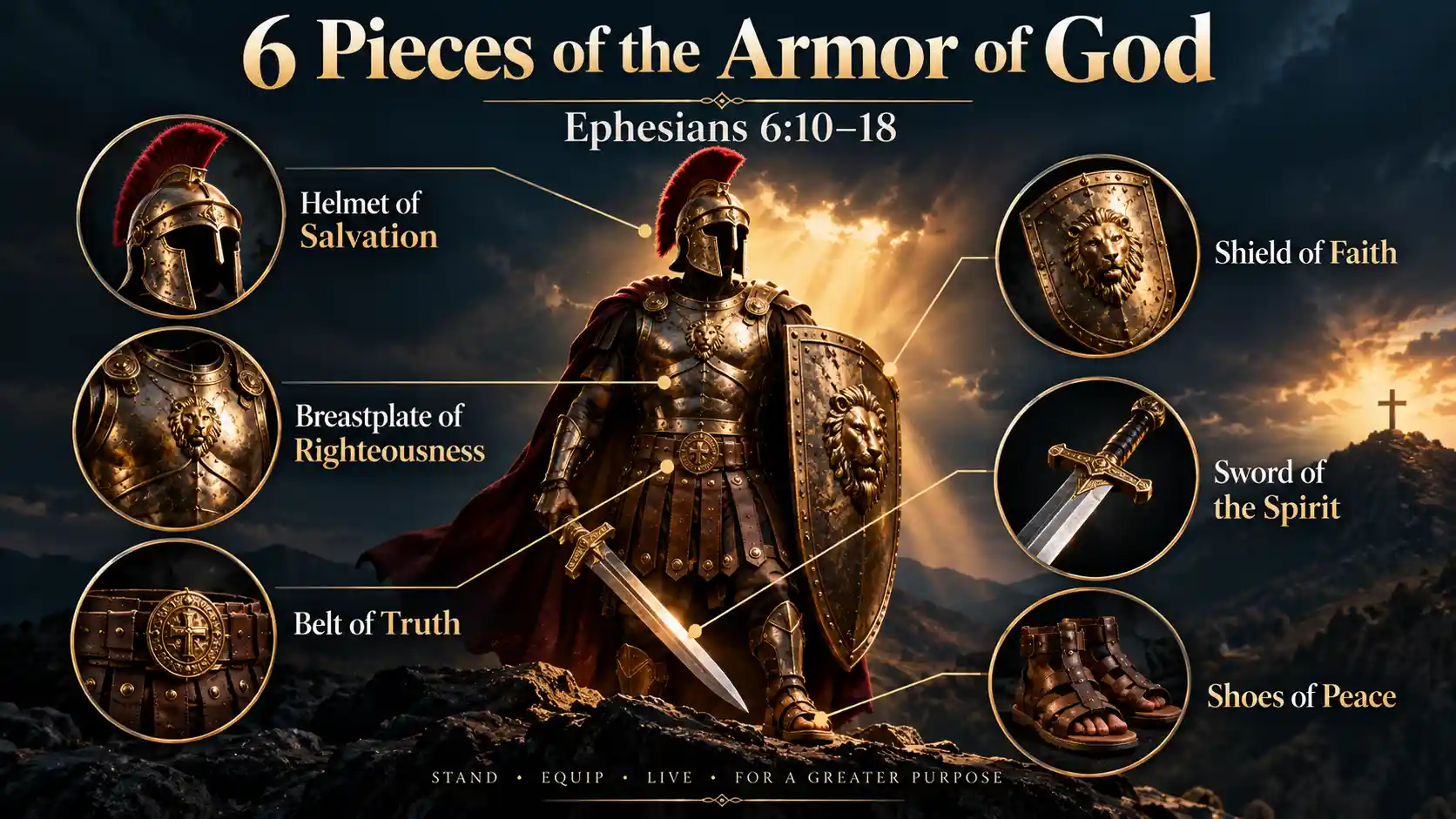
The main Armor of God scripture is Ephesians 6:10–18. Paul names six pieces of armor: the belt of truth, breastplate of righteousness, shoes of the gospel of peace, shield of faith, helmet of salvation, and sword of the Spirit. Verse 18 immediately adds continual prayer and alertness. That is why some Christian teaching describes six pieces of armor while others count prayer as a seventh.
What does Ephesians 6:10–18 mean?
Ephesians 6:10–18 teaches believers to rely on God’s power rather than their own strength when facing spiritual opposition. Paul uses the picture of armor to describe a life grounded in truth, righteousness, the gospel of peace, faith, salvation, Scripture, and prayer.
The paragraph begins with the command to be strong in the Lord and repeatedly tells believers to stand. That repeated language is central to the passage. The goal is not reckless spiritual aggression. The goal is faithful resistance—remaining steady when temptation, deception, fear, accusation, discouragement, or other spiritual pressures try to move a believer away from God.
The passage also includes an important boundary: Paul says the struggle is not against flesh and blood. Other people are not to be treated as the ultimate enemy.
The Armor of God at a glance
Ephesians 6:14–17 names six pieces of armor. Verse 18 then continues with prayer, alertness, perseverance, and intercession for other believers.
| Piece | Reference | Core emphasis | Practical response |
|---|---|---|---|
| Belt of Truth | Ephesians 6:14 | Truth and integrity | Let what is true before God shape what you believe and how you respond. |
| Breastplate of Righteousness | Ephesians 6:14 | Right standing and right living | Rest in God’s grace and refuse patterns of compromise. |
| Gospel of Peace | Ephesians 6:15 | Stable footing and readiness | Stand in the peace of the gospel and be ready to carry that good news. |
| Shield of Faith | Ephesians 6:16 | Active trust in God | Answer fear, accusation, doubt, and temptation with trust in God. |
| Helmet of Salvation | Ephesians 6:17 | Salvation, hope, identity | Let God’s saving work shape how you think about yourself and your future. |
| Sword of the Spirit | Ephesians 6:17 | The Word of God | Know Scripture well enough to remember, understand, and obey it under pressure. |
| Prayer & Alertness | Ephesians 6:18 | Dependence and perseverance | Pray in the Spirit, stay watchful, and pray for God’s people. |
Are there six pieces of the Armor of God or seven?
Ephesians 6:14–17 explicitly names six pieces of armor. They are the belt of truth, breastplate of righteousness, shoes of the gospel of peace, shield of faith, helmet of salvation, and sword of the Spirit.
In verse 18, Paul immediately continues with prayer in the Spirit, alertness, perseverance, and intercession. Because prayer is closely connected to the armor passage, many devotional teachings refer to seven pieces of the Armor of God by counting prayer as the seventh.
A more precise way to describe the text is: six named pieces of armor plus continual prayer.
The Armor of God is deeper than a Roman-soldier illustration
Roman military imagery helps modern readers visualize belts, breastplates, shields, helmets, footwear, and swords. But Paul’s imagery also has deep roots in the Old Testament.
Isaiah 11:5 connects righteousness and faithfulness with a belt. Isaiah 52:7 connects feet, good news, peace, and salvation. Most strikingly, Isaiah 59:17 pictures God wearing righteousness as a breastplate and salvation as a helmet.
Those connections make the phrase “Armor of God” especially meaningful. Believers are not being told to manufacture spiritual toughness. They are taking up qualities and gifts rooted in God’s truth, righteousness, saving work, good news, and power.
What does “stand firm” mean in Ephesians 6?
One of the most important details in Ephesians 6 is easy to overlook: Paul repeatedly uses the language of standing.
Believers are told to stand against the devil’s schemes, withstand the evil day, remain standing after the struggle, and then “stand therefore.”
That means the dominant picture is not uncontrolled attack. It is stability, endurance, resistance, and faithfulness.
Verse 12 adds another important distinction by saying the struggle is not against flesh and blood. A spouse, coworker, neighbor, church member, political opponent, or stranger should not automatically be treated as the spiritual enemy simply because there is disagreement or conflict.
The six pieces of the Armor of God explained
Each piece below begins with what Ephesians actually says, followed by a practical application. Modern examples can help explain the passage, but they should not be confused with definitions Paul himself gives.
The Belt of Truth
The first named piece of the armor is truth. In the metaphor, truth prepares and steadies the believer. It includes believing what is true about God, refusing deception, and living with integrity.
Truth is therefore more than possessing correct information. Someone can know facts and still live dishonestly. The belt image points toward a life held together by what is true.
The Breastplate of Righteousness
A breastplate protects the torso, and Paul connects that image with righteousness. Christian interpretation commonly emphasizes both the righteousness believers receive from God and the righteous life they are called to live because they belong to him.
Those truths should not be turned into opposites. Grace is not permission to cultivate compromise, and obedience is not a way to earn salvation.
Feet Fitted with the Gospel of Peace
Ephesians 6:15 connects the believer’s feet with readiness that comes from the gospel of peace. In a passage repeatedly concerned with standing, the image naturally suggests stable footing and preparedness.
Isaiah 52:7 also helps explain why feet, good news, and peace belong together. The gospel gives believers a firm foundation and makes them ready to carry good news.
The Shield of Faith
Paul says the shield of faith can extinguish the flaming darts of the evil one. The image is active: the shield must be taken up.
Faith here is not vague optimism. It is trust directed toward God.
Paul does not provide a complete catalog of what every flaming dart represents. Fear, doubt, temptation, accusation, shame, and discouragement can be helpful applications, but they should not be presented as a secret glossary hidden inside the verse.
If fear or discouragement is the pressure you are facing, explore these encouraging Bible verses .
The Helmet of Salvation
A helmet naturally suggests protection of the head, but Paul’s word is salvation. The believer’s thinking is steadied by what God has done and by the hope connected to his saving work.
This does not mean a Christian will never experience anxiety, intrusive thoughts, confusion, or emotional distress. The metaphor is not a medical promise. It gives the mind a theological anchor: the pressure of the present moment does not have the final word over identity or hope.
For a related Scripture guide focused on courage and self-doubt, see Bible verses about confidence .
The Sword of the Spirit
Paul directly identifies the sword of the Spirit as the Word of God.
Scripture is not given here as ammunition for attacking other people. It equips believers to recognize truth, resist deception, answer temptation, and remain obedient.
Owning a Bible is not the same as being ready to use Scripture wisely. God’s Word becomes practically useful as it is read in context, understood, remembered, believed, and obeyed.
If Scripture memorization is part of your routine, explore BiblePrints’ printable Bible Scripture cards .
Prayer is not an afterthought to the Armor of God
Immediately after the sword of the Spirit, Ephesians 6:18 turns to prayer: prayer in the Spirit, prayer at all times, different kinds of prayer and requests, alertness, perseverance, and prayer for all God’s people.
That last detail widens the focus. The Armor of God is not merely a private self-protection routine. Paul’s vision is communal. Believers are told to stay spiritually alert and pray for one another.
This also protects the passage from becoming a ritual formula. Merely saying the names of six pieces is not presented as a magic incantation. The deeper pattern is a life dependent on God—truthful, righteous, gospel-grounded, trusting, salvation-shaped, Scripture-filled, and prayerful.
How to put on the Armor of God daily
You do not need to invent a mystical ritual to obey Ephesians 6. A simple framework can connect the passage to real decisions without pretending every problem maps perfectly to one piece of armor.
A simple five-minute Armor of God practice
1. Read Ephesians 6:10–18 slowly.
2. Name the pressure you are actually facing.
3. Identify which truth in the passage speaks most directly to it.
4. Choose one concrete response consistent with that truth.
5. Pray for strength to follow through and for another believer who may also need prayer.
When life feels especially overloaded, the same principle of returning to Scripture rather than reacting from panic can help alongside these Bible verses for feeling overwhelmed .
Prayer to put on the full Armor of God
Father, make me strong in You rather than confident in myself. Fasten me to what is true. Guard my heart with the righteousness You give and the obedience You call me to. Give me firm footing in the gospel of peace. Teach me to trust You when fear, temptation, accusation, or doubt comes.
Keep the hope of salvation clear in my mind. Bring Your Word to mind and help me understand and obey it faithfully. Teach me to stand without treating people as my enemy. Keep me alert, humble, and prayerful. Help me pray not only for myself but for Your people.
In every pressure today, make my life steady in Your strength. Amen.
Common misunderstandings about the Armor of God
What is the main lesson of Ephesians 6:10–18?
The lesson is not that Christians should become fascinated with evil. The paragraph points attention back to God: be strong in the Lord, take up what he provides, and stand.
Truth keeps deception from setting the terms. Righteousness resists compromise. The gospel gives stable ground. Faith trusts God under fire. Salvation anchors hope. Scripture gives a truthful response. Prayer keeps the entire life dependent, alert, and connected to the needs of others.
Armor of God Scripture FAQs
What are the 7 pieces of the Armor of God?
What Bible verse contains the full Armor of God?
How do you put on the Armor of God daily?
Is prayer the seventh piece of the Armor of God?
What is the lesson learned from Ephesians 6:10–18?
What does the sword of the Spirit mean?
Why are the shoes called the gospel of peace?
About This BiblePrints Scripture Guide
Prepared by BiblePrints. This guide was built around the primary passage, Ephesians 6:10–18, and its major biblical connections, especially Isaiah 11:5, Isaiah 52:7, and Isaiah 59:17.
How this guide was prepared: the article separates what Ephesians explicitly says from later devotional applications. For example, it distinguishes the six named pieces from the common practice of counting prayer as a seventh, and it labels modern examples of “flaming arrows” as applications rather than definitions supplied by Paul.
Translation note: exact Scripture quotations on this page use the World English Bible (WEB) , a public-domain English translation. References and explanations can be read alongside the Bible translation you normally use.
BiblePrints does not claim pastoral or theological credentials it does not have. The purpose of this resource is to help readers understand the passage carefully, keep Scripture in context, and apply it thoughtfully. Learn more on the About BiblePrints page.
The point of the Armor of God is not to make believers feel powerful on their own. It is to make them steady in God’s strength—truthful, faithful, prayerful, and able to stand.